
Reproductive Adaptations
There are a variety of reproductive adaptations but covered on this page are Oviparity, Ovoviparity, Viviparity and Delayed Implantation.
What is Oviparity?
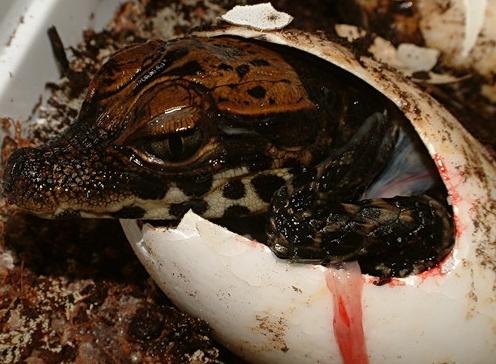
Oviparous animals are those that lay eggs, the embryo do not grow inside the mother's body. Most fish, reptiles and amphibians use this method as do all birds, the monotreme mammals and also most insects and arachnids. The terrestrial animals like reptiles and insects have sexual intercourse and are fertilised internally while marine animals such as fish and amphibians lay their eggs and the male lays his sperm on the laid eggs. This is external fertilisation.
Advantages of Oviparity
- Animals that lay eggs do not need to consume as much food.
- Animals that lay eggs do not become larger because the embryos are not growing within them.
- Some young that hatch (Crocodiles, snakes etc) are able to defend themselves straight away.
- Most young that hatch from eggs are like miniatures of the adults, fully developed and need no care.
Disadvantages of Oviparity
- The eggs have to be incubated and guarded against predators to ensure they survive.
- If there is any danger from predators or lack of food, the females are unable to relocate the whole nest.
- If the eggs hatch alone they have no experience on where food may be or what animals are predators.
What is Ovoviparity?
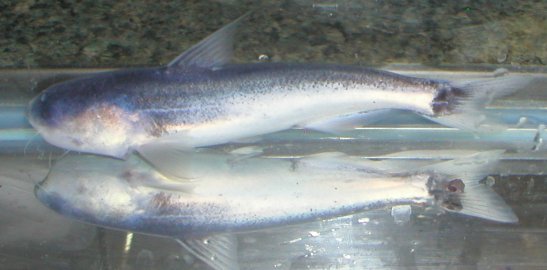
ovoviviparous animals have embryos that develop within an egg that still develops within the female's body. Instead of being nourished by the female the embryos will feed on the yolk of the egg which keeps them healthy until they hatch. The female is required for gas exchange to the embryos, this group includes Echidnas and some sharks and reptiles.
Advantages of Ovoviparity
- The young tend to be alot larger than usual and are more advanced in their growth.
- There is no nest to defend as the embryos are carried within the female's body.
- The embryos receive nourishment through the egg yolk so the female does not have to raise her intake of food.
- The embryos are still provided with a source of gas exchange by the female which is absorbed through the membrane-like shells of the eggs.
Disadvantages of Ovoviparity
- The young are not as dispersed as those who hatch from eggs and fend for themselves.
- There is limited space within the female's body which inturn means less eggs, as they grow it hinders the female's intake of food.
- If the female dies whilst egg carrying, they will die with her.
- Raising eggs still takes alot of the female's energy, gas exchange and carrying them as they grow creates a hinderance.
What is Viviparity?
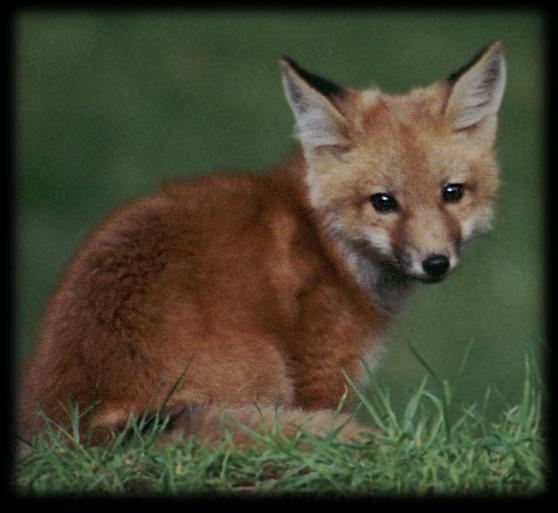
Viviparous animals are those that develop fully inside the female's body which means she gives birth to live young. The most developed of this group are the placental mammals, the embryos develop inside the female's womb and are nourished via the umbilical cord and placenta. Gas exchange is also directed through the cord and placenta from female to the embryos. Some examples of this group include felines, humans, apes and some sharks.
Advantages of Viviparity
- The young are not left at any point while the female goes and feeds. Predators can not kill the embryos unless they kill the female.
- Body heat keeps the embryos at the right temperature; eggs are more likely to die if exposed to the elements.
- Most Viviparous females will stay with the young once they are born to teach them the basic necessities of life and to protect them.
- The female can move her position to protect herself and the developing embryos, if there was a shortage of food or a threat she could just up and leave and not worry about abandoning them.
Disadvantages of Viviparity
- When the female is giving birth (parturition) she and the young are helpless against predators and the elements.
- As the embryos are developing, larger species like the elephant often become big and begin to hinder movement and speed.
- The young tend to depend on the female for a long time, they feed from the female which can put strain on her body and time.
- Feeding young often takes alot of energy from the female and she will lose weight so needs to eat more regularly to care for her young.
What is delayed implantation?
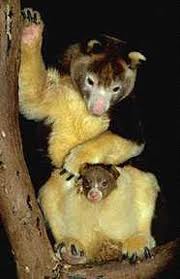
Delayed implantation also known as embryonic diapause is when the embryo does not attach itself to the uterus wall immediately but instead remains dormant. Because the embryo is not attached the female's pregnancy can be drawn out, this is extremely important if the female inhabits harsh conditions and needs the opportunity to keep herself healthy first. The young are born prematurely and will continue their growth in a pouch or body depending on their species, some of these include Kangaroos, other marsupials and some bears.
Advantages of delayed implantation
- The embryo are only developed when there is a quantity of food and water that will sustain both female and the embryo.
- The female can develop more than one embryo at the same time by varying the gestation times. This is especially helpful if one of the embryos dies.
- The young are less likely to fall prey because they are not newborn but are fairly large before they venture away from the female's pouch/body.
Disadvantages of delayed implantation
- The embryos can develop differently because of the gestation time they began growing, a longer gestation time may cause issues with food and water.
- Carrying the young is a hinderance for the female who will be concentrating on protecting her premature young rather than feeding.